Our Curated List of Boutique Hotels in Paris
Paris doesn't need another list of the usual suspects. You already know the grand palace hotels with their gilded ceilings and white-gloved service. This is something different. We've spent time tracking down hotels that feel less like accommodation and more like discovering a friend's apartment, if that friend happened to have impeccable taste and a knack for making you feel instantly at home. From a grandmother's namesake in the 16th to a wellness sanctuary in Pigalle, these are the places where the details actually matter.
Hotel Noucha
Tucked on a quiet street in the residential 16th arrondissement, Hotel Noucha feels like stepping into someone's inherited Parisian apartment, if that someone had three generations of excellent taste. Owner Samuel Gelrubin named this 27-room hotel after his maternal grandmother, and that family warmth shows everywhere: from the mismatched vintage tableware at breakfast to the custom carpets that give each room its own personality. Designer Jordane Arrivetz worked with architectural firm Renaissance les Architectes to honor the building's Haussmann bones (original marble fireplaces, crown moldings) while layering in pieces that span decades. A roll-top bathtub here, a canopy headboard there.
The neighborhood itself has serious architectural pedigree; you're a five-minute walk from Hector Guimard's Art Nouveau masterpiece Castel Béranger and other early 20th-century gems along Rue Jean de la Fontaine. Breakfast is served in a light-filled space that turns the morning into a genuine ritual rather than a rushed affair. Some rooms enjoy open views across the surrounding rooftops. This isn't the Paris of tourist hordes. It's the Paris of afternoon walks through the leafy streets of Auteuil and discovering your new favorite neighborhood bakery.
Why we like it: The custom-designed carpets, headboards, and valet stands mean no two rooms are identical, and the hotel's commitment to being Clef Verte certified (they compost, use returnable glass water bottles, and skip single-use plastic) feels genuine rather than performative.
Price range: $
Hotel Casimir
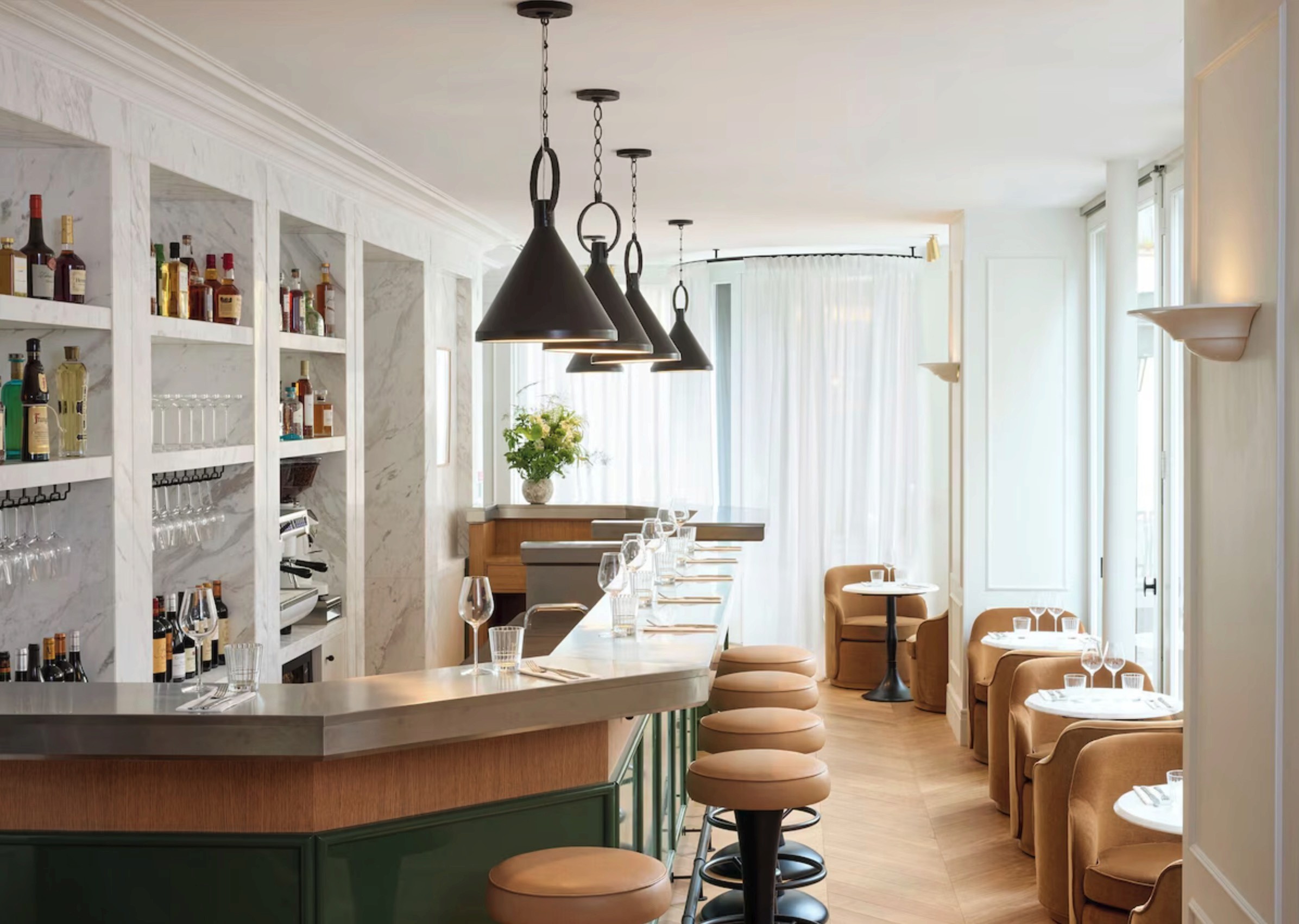
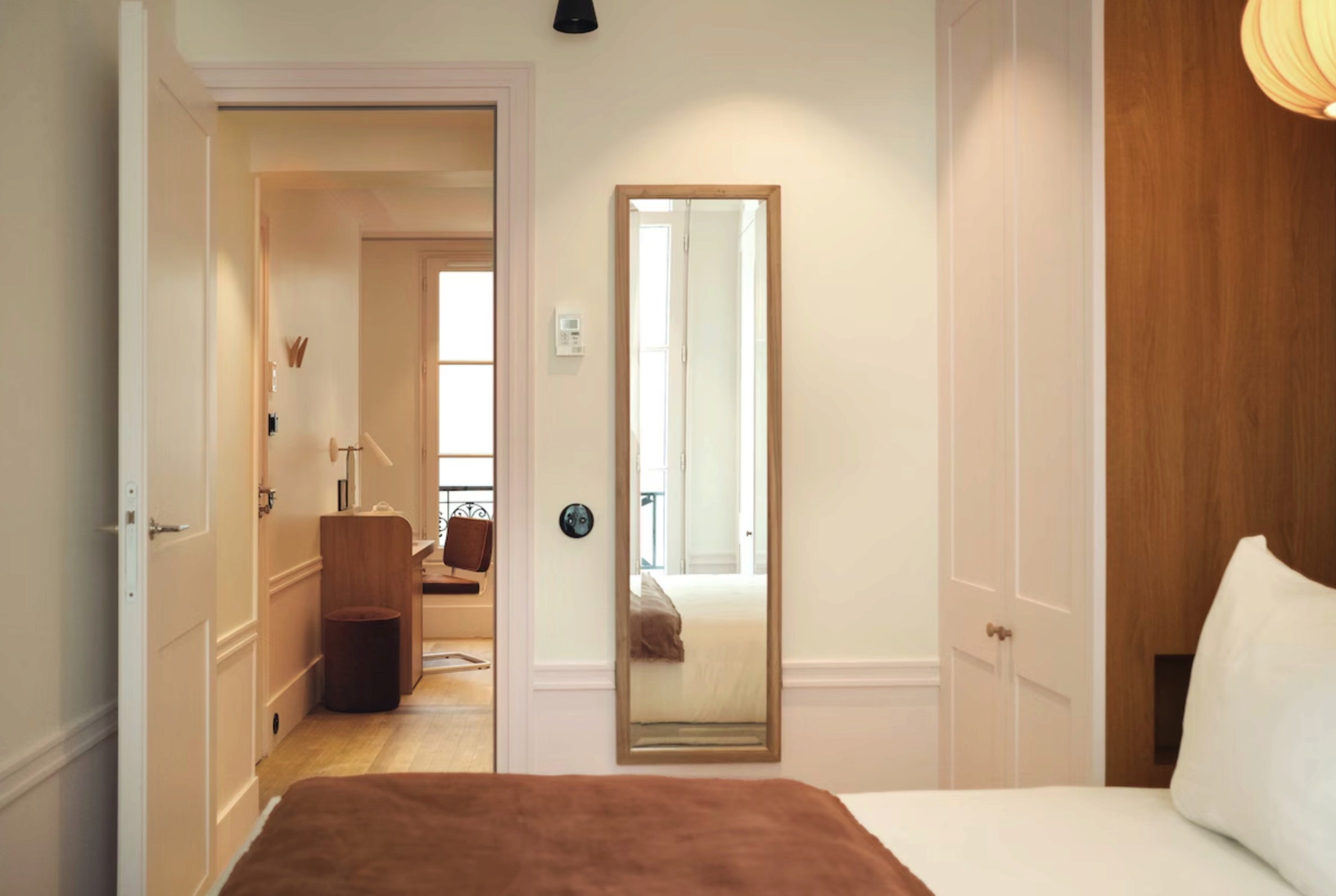
On Rue de Courcelles in the 17th, just off Place Pereire, Hotel Casimir recently reopened after a full transformation by a Parisian architectural team. The 40 rooms maintain that particular French balance of warmth and restraint. Think oak-framed, color-blocked walls, thoughtful brass fixtures, and none of the fussiness that can make boutique hotels feel like they’re trying too hard. The building itself has the kind of elegance that comes from good bones: a classic townhouse façade that opens onto an interior courtyard, giving many of the rooms a welcome buffer from street noise.
You’re within easy walking distance of Parc Monceau’s colonnaded follies and even closer to the neighborhood bistros where locals actually eat. The Metro at Pereire connects you to the rest of the city easily, but there’s an appeal to staying put. The hotel’s veranda bar is the kind of spot where you end up lingering longer than planned. Staff here seem genuinely invested in making your stay work, whether that’s arranging a last-minute dinner reservation or just pointing you toward the good boulangerie. The neighborhood has that lived-in quality that the more tourist-heavy arrondissements lack: bakeries, flower shops, the occasional butcher still operating out of a century-old storefront.
Why we like it: The recent renovation (2025) brought the hotel into the present without erasing its character, and the location gives you that rare combination of residential calm and easy access to everything else. Porte Maillot is one Metro stop away, the Champs-Élysées a comfortable walk.
Price range: $
La Fantaisie
The moment you walk into La Fantaisie on Rue Cadet in the 9th, the volume gets turned up. Not in noise, but in color, pattern, and sheer visual joy. Martin Brudnizki, the London-based designer behind some of the world's most beautiful restaurants and hotels, made his Paris hotel debut here, and he went all in: bold florals, jewel-toned velvets, handcrafted mosaics in the subterranean spa. The building unfolds like a flower, from the botanical murals around pale green pools in the basement to the rooftop bar with its thicket of plants and vintage sofas, where you can watch the sun set behind the Eiffel Tower and Sacré-Coeur with a cocktail in hand.
The hotel's restaurant serves seasonal French cuisine with international influences in a light-filled space that opens onto the garden. The 63 rooms and 10 suites pull back from the maximalism of the public spaces. They're brighter, airier, done in florals and soft pastels, but still manage to feel special. Some have balconies overlooking either the internal garden or the street. The spa downstairs isn't just for show: there's a proper heated pool, hammam, sauna, and treatments that lean holistic.
Why we like it: This hotel has one of the only legitimate gardens among five-star Paris hotels, plus that knockout rooftop, which gives you two entirely different outdoor experiences without leaving the building. The hotel's location in Faubourg Montmartre puts you near the covered passages (Jouffroy, Verdeau) and just far enough from the Grands Boulevards crowds.
Price range: $$$

Elysée Montmartre Hotel
Sandwiched between two legendary music venues on Boulevard Rochechouart (the avant-garde Trianon theatre and the concert hall that's hosted everyone from David Bowie to Daft Punk), the Elysée Montmartre Hotel claims one of the most rock-and-roll locations in Paris. Yet step through the doors and you find something surprisingly serene: just 16 rooms and four duplexes with custom eucalyptus wood furniture (the material is typically used for paper, which adds an eco-conscious dimension) and a design that honors both the building's character and the neighborhood's artistic history.
Producer Abel Nahmias and architect Julien Labrousse designed the hotel as a place where music lovers can actually rest between gigs rather than just crash. Guests get privileged access to concerts next door, which means you can combine your room reservation with tickets to sold-out shows. The front of the building faces the perpetual action of Pigalle and Montmartre; the back offers unexpected views of Sacré-Coeur. Despite being in one of Paris's most animated corners, the hotel maintains a quiet, almost meditative quality (good soundproofing helps). You're a quick walk to the Moulin Rouge, the Wall of Love, and the winding streets that climb toward the basilica, but you're also surrounded by neighborhood spots that locals haven't abandoned yet.
Why we like it: The musicality isn't just a gimmick. This hotel genuinely cares about sound, both in terms of what you hear (concerts) and what you don't (street noise), and the custom eucalyptus furniture gives the rooms a warmth that feels distinct from typical boutique hotel interiors.
Price range: $$

La Fondation
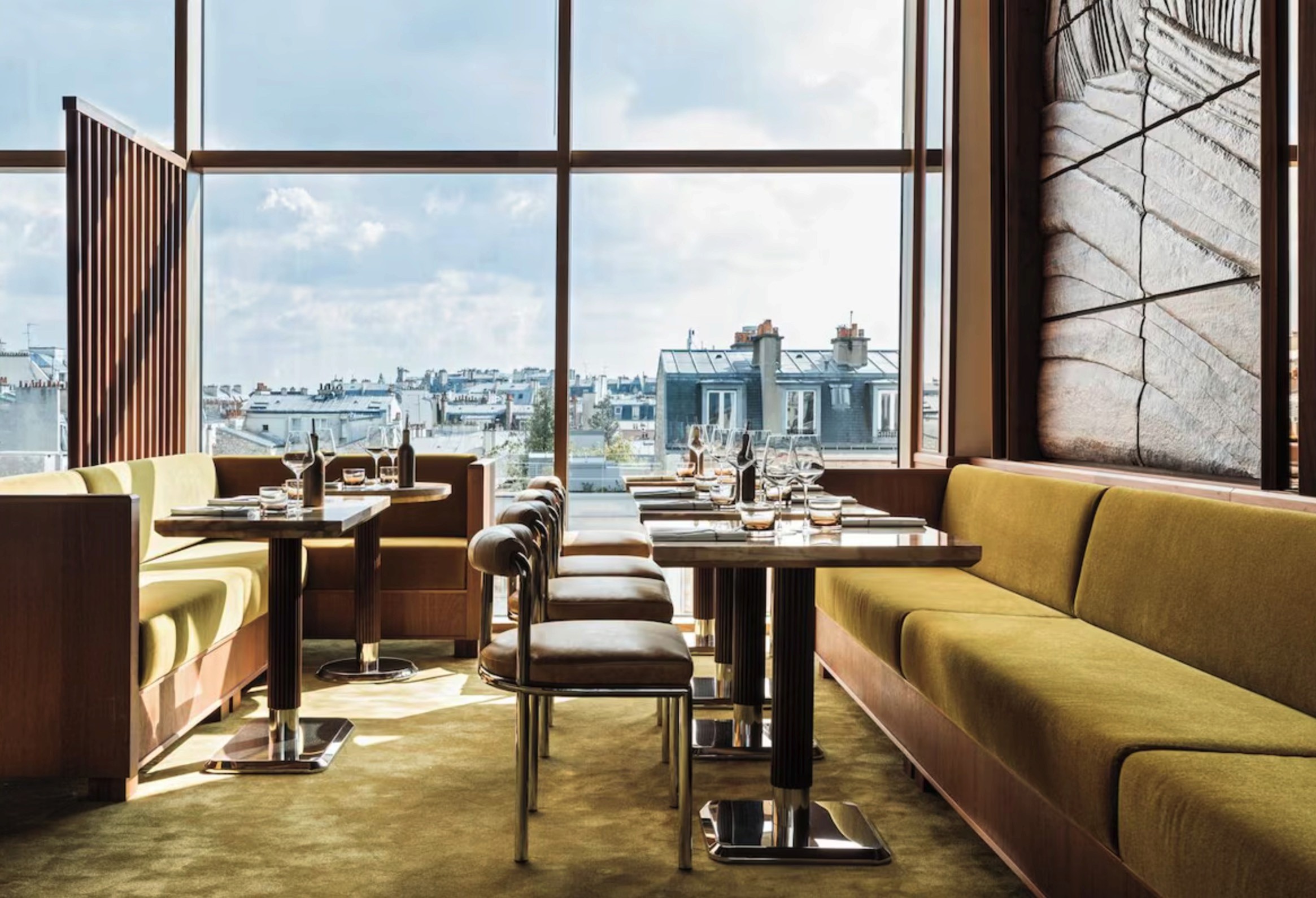
La Fondation took what could have been a teardown (a 1960s brutalist parking garage in the 17th arrondissement) and transformed it into something startlingly elegant. Architecture firm PCA-STREAM kept the building's industrial DNA (including the original spiral ramp) while New York's Roman & Williams layered in interiors inspired by Paris's late Modernist period: color-blocked walls framed in oak, custom brass and patinated metal fixtures, and artwork throughout. The 58 rooms, including three suites, feel bright and comfortable rather than austere, and the views stretch from Sacré-Coeur to the Eiffel Tower.
But the real story here is the ambition of the programming. Two restaurants by local chef Thomas Rossi (La Base brasserie on the ground floor and Les Ailes bistronomic restaurant on the eighth), a rooftop bar that's become a neighborhood fixture, and a full-scale wellness center with a 26-meter heated pool, climbing wall, Technogym equipment, hammam, sauna, and over 100 weekly fitness classes. The hotel sits between Parc Monceau and the village-like streets of Les Batignolles, a neighborhood that still feels authentically Parisian. The hotel also hosts concerts, exhibitions, and talks, functioning as an actual cultural foundation rather than just borrowing the name.
Why we like it: That semi-Olympic pool alone is a rarity in Paris hotels, but La Fondation goes further by creating a genuine multi-use space that locals subscribe to for the gym and spa, which gives the property an energy beyond typical hotel insularity.
Price range: $$$
Bloom House
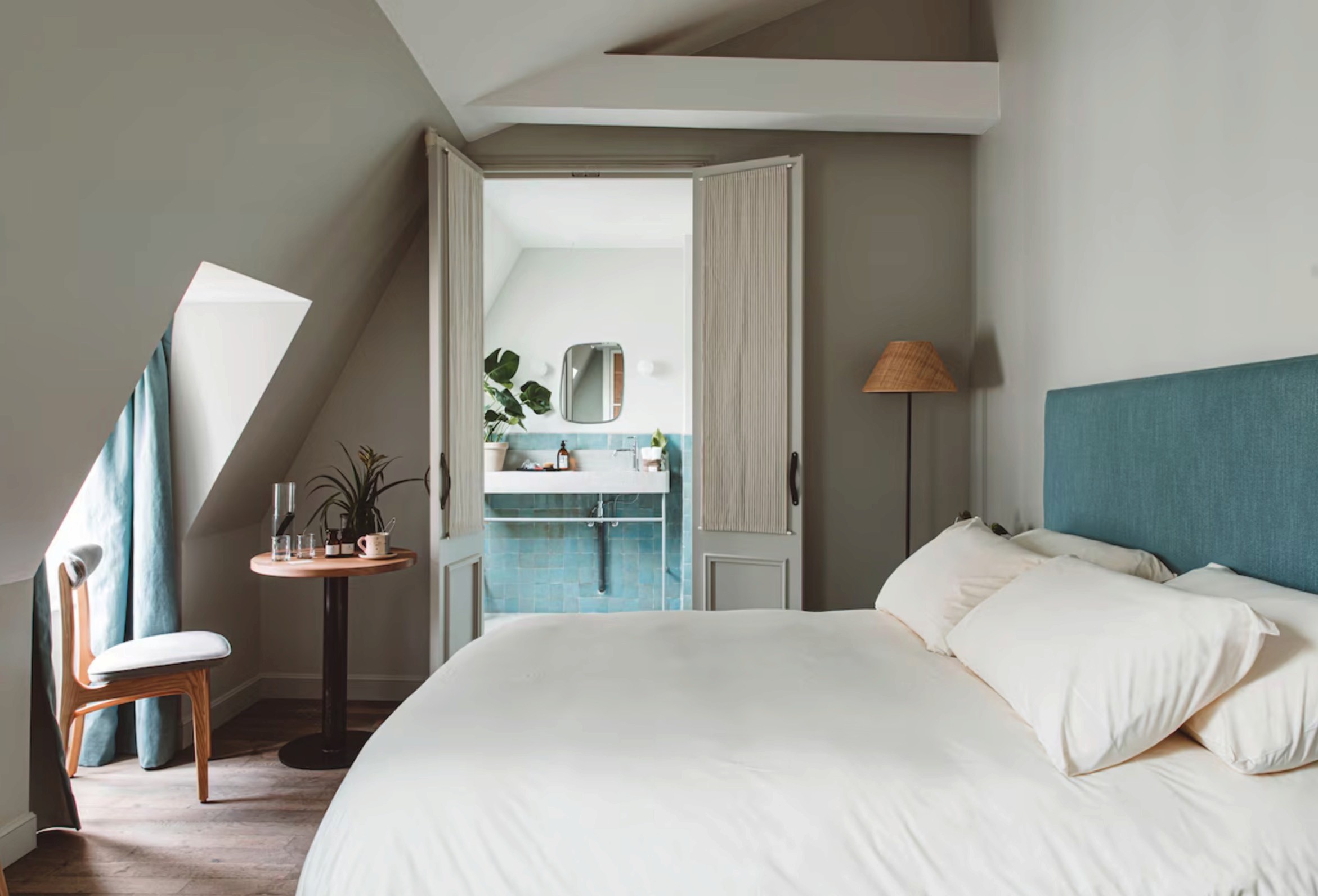
In the 10th arrondissement near Gare de l'Est, Bloom House delivers an unexpected vibe: Mediterranean warmth in the heart of Paris. The lobby and interior courtyard lean into that Côte d'Azur feeling with zellige tiles, lush plants, earthy tones, and furniture that looks like it was sourced from a stylish beach house. The 91 rooms and suites tone it down slightly (think sunkissed neutrals, patterned floors, organic textiles) but maintain that sense of being somewhere sunnier than you actually are.
The 18-meter indoor pool is a major draw (indoor pools in Paris hotels are shockingly rare), bathed in natural light from a skylight and surrounded by loungers where you can actually spend an afternoon. The spa includes a sauna and treatment cabins, and the restaurant, Bloom Garden, serves Mediterranean cuisine by Chef Raphaël Gerby in a colorful dining room that opens onto the interior courtyard. The hotel sits in a quieter, more residential part of the 10th, just minutes from the Canal Saint-Martin and Paris's Little India (Passage Brady), which means you're close to some of the city's most interesting off-the-beaten-path eating and drinking. The neighborhood lacks tourist polish, which is exactly the point.
Why we like it: The indoor pool with its skylight creates an actual oasis feeling rather than just a nice amenity, and the location near Canal Saint-Martin and the Indian quarter means you're exploring parts of Paris that don't make the guidebooks but probably should.
Price range: $$

HOY Paris
On Rue des Martyrs in the 9th, HOY (House of Yoga, but also Spanish for "today") approaches hospitality through the lens of wellness in a way that feels considered rather than trendy. The 22 rooms skip TVs entirely in favor of elements that actually help you decompress: stretching bars for impromptu yoga, Japanese binchotan charcoal to mineralize your water, air purification systems, and organic toiletries from The Naked Shop. The design follows Feng Shui principles with neutral tones and natural materials, creating spaces that prioritize calm over Instagram moments.
YUJ Yoga runs France's first infrared-heated yoga studio in the hotel's lower level, offering classes to guests and the public in a practice that uses body warmth to deepen stretches and aid detoxification. The wellness space extends beyond typical spa treatments into meditation, energy work, and holistic services. Mesa, the plant-based restaurant from the Plant Academy team, serves Latin American-influenced cuisine that's both healthy and genuinely flavorful (no sad salads here). There's also a Japanese florist in the lobby, because why not surround yourself with fresh flowers. The Pigalle location puts you near the Opéra Garnier, Galeries Lafayette, and the neighborhood's growing collection of natural wine bars and independent boutiques.
Why we like it: HOY commits fully to its wellness concept without the self-seriousness that can make these places feel preachy. The charcoal-filtered water and stretching bars are thoughtful touches rather than performative gestures, and rooms without TVs feels like a genuine choice about how you spend your time rather than a cost-cutting measure.
Price range: $$
Paris does boutique hotels better than almost anywhere else, especially when you know where to look. From design-forward newcomers to deeply personal small addresses, there’s a version of the city that feels just right for every kind of stay. Check out our full Paris boutique hotel collection to discover more places worth planning a trip around.
Bob Stolk
Curator, A Good Stay
Want to wake up to a beautiful boutique hotel every morning?
Sign up for our newsletter.


